Dog/Dog Aggression, or Is It?

Christine Hibbard, CTC, CPDT

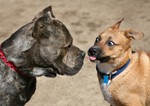
One of the most common calls we get from prospective clients starts with something like, “My dog is aggressive with other dogs, can it be fixed?” I’ve learned over the years that dog/dog aggression is sometimes in the eye of the beholder. The situation is further complicated because there are different types of dog/dog aggression.

Normal Dog PlayDogs playing
Sometimes, what an owner describes as dog/dog aggression is actually normal dog play. The way dogs play can seem scary to some human beings. These owners are overly conscientious about their dog’s behavior and his/her interaction with other dogs. While being conscientious about your dog’s behavior is a very good thing, like any good trait, it can be taken to an extreme. I sometimes wish I could wave a magic target stick that would make some overly conscientious owners worry less by transferring some of their worry and concern to owners who do not have enough of it. There’s a hilarious blog called Three Woofs and a Woo published by a photographer. She has wonderful shots of dogs playing.

Playground Bully
Some dogs never learned the manners of polite dog play society. They are like some people, just kind of clueless about how their behavior affects others. Jean Donaldson calls these dogs “Tarzans”. The most common sign of a playground bully is that the dog just doesn’t read cut off signals from their playmate. The other dog throws all kinds of body language that says, “OK, we’re done now, that’s enough play from you” and these bully dogs just don’t take the hint. Some dogs handle bullies quite well while others, well; they get a bit snarky when being mugged rudely by another dog who just doesn’t know when enough is enough. These dogs are rude, but not what we would call “truly dog aggressive”.

dog dog aggressionFear Aggression
Many owners believe that in order for their dogs to be mentally healthy, they must go to the dog park, or have social interactions with other dogs of some kind. This is not always the case. The reason that a dog is afraid of other dogs can stem from several causes. Some puppies were not exposed to other puppies during their socialization window. The socialization window is the first 18 to 20 weeks of a dog’s life and it’s the most important developmental learning period in a dog’s life. Puppies who never learned how to read other puppies’ body language and play cues can be afraid of other dogs later in life. Imagine if you lived at home with your brothers and sisters and never saw other children until you were 16 years old. When you finally left the house to go to high school, you’d probably be pretty uncomfortable around teenagers your own age, right?

Some dogs have had one or more traumatizing experiences from their interactions with other dogs. These experiences might have been terrifying, but not result in any physical damage. The damage comes in the form of fear of other dogs. When I see young puppies at the dog park being knocked down, run over, and played with inappropriately for their age, I cringe. What may seem funny or cute to the owners who think they are doing the right thing by “socializing” their puppy with other dogs inappropriately may be setting that puppy up for fear aggression around other dogs later in life. Its inappropriate to socialize a young puppy at the dog park where you can’t control the play interaction. If you have a puppy, find a Puppy Kindergarten that focuses on lots of supervised, off leash play with other age appropriate puppies. I’ve had clients call me because their dog was brutally attacked by another dog and now their dog is afraid of all other dogs. That’s the problem with fear; it has a tendency to generalize.

Leash Reactivity (aka Leash Aggression)Dog pulling on leash
I don’t like the term “leash aggression” because many of the dogs that react badly on leash by growling, barking, and lunging at other dogs are not aggressive. They’re reactive. You can tell whether your dog is exhibiting dog/dog aggression vs. leash reactivity by answering a simple question, “How does your dog play with other dogs off leash?” If your dog plays well at the dog park, but acts aggressively toward other dogs on leash, you have leash reactivity. If your dog displays fear aggression towards other dogs off leash, you have what most people call leash aggression.

Sometimes the most difficult cases for me to handle are the ones where the owners have never let their dog off leash around other dogs based on their reaction to other dogs while ON leash. I got a call from a woman who adopted a black lab mix from a shelter. Whenever she took the dog outside for a walk and encountered another dog on leash, she said her dog “was uncontrollably aggressive”. She had never let her new dog play with other dogs off leash because she was afraid of what her new dog would do. I decided to have a look for myself, or I should say I decided to let my dog Conner have a look for himself (see my colleague Greta’s post about Canine assistants for dog/dog fear & aggression). My dog Conner is absolutely amazing with other dogs. He just “speaks dog” with the most beautiful, calming body language that he throws at other dogs.

Dogs playing tugI had the owner stand with her dog on the sidewalk. I got Conner out of the car a block away. As we walked closer to her dog, I saw her dog put his ears up and rotate them out (sexy ears!) and then he started prancing and throwing play bows. As we got even closer, he starting barking hysterically and lunging on leash. Her dog wasn’t aggressive. He was leash reactive. He was so desperate to get to the other dog to play that he acted like a total lunatic. When I told the owner to drop her leash, I dropped Conner’s leash and totally appropriate and hilarious play ensued. It’s wonderful to see an owner cry tears of happiness.

We had some work to do with that dog, after all, while the owner was relieved her dog wasn’t dangerous, she still couldn’t walk him in the neighborhood acting like a total hysteric every time he saw another dog, but we knew what we had and could fix it relatively quickly. The way we treat leash reactivity and leash aggression can be quite different, but to treat it appropriately, we’ve got to know what we’ve got; hysterics, fear, or aggression?

Dog/Dog Aggression
Dog/dog aggressionWe do encounter what we call “true dog/dog aggression”, but it’s the most rare type of dog/dog aggression. Some dogs just find fighting with other dogs incredibly reinforcing. Other dogs, because of their breeding, or how they’ve been handled, or both, actually will kill another dog. This type of dog/dog aggression is quite rare compared to the dog/dog aggression that we see that is fear based.

These cases are difficult because of the time and resources that it takes to counter condition this behavior. Performing this type of work to help these dogs takes controlled environments, a great deal of time, and many, many stimulus dogs before we begin to see any effect. Often the cost and time are prohibitive and we’re left with two choices; the 3 Ms (a lifetime of Management/Muzzles/Medication), or euthanasia.

Do you have stories from your trips to the dog park that you’d like to share? Have you or are you dealing with leash reactivity? Tell us your stories or share your thoughts. We love to hear from our dog owners.

34 Responses to “Dog/Dog Aggression, or Is It?”

  1. Frank Robey Says:

    Hi,

    We just adopted (saturday morning) a 6 month old German Shepard from a local shelter. She had been surrendered by her owner due to a substance abuse issue so we don’t have any history on her.

    She is the sweetest dog…with humans. On sunday afternoon our neighbors that have a Chesapeake Bay Retriever (2 year old) was around, he is a great dog that just ignores other dogs. I told Annette she ought to bring Tess outside to meet Aragorn since he’s so laid back. She put Tess on the leash and took her out….as Aragorn walked toward her (he wasn’t on a leash) she went ballistic, barking histerically, pulling on the leash, nipping at Aragorn…we were very surprised at her behavior. She was fine with his owners…

    We brought her back inside and now aren’t sure what to do…I don’t know if she’s like this only when on leash or would be OK if she was off leash but I’m afraid to take her off leash since she might bite another dog…

    I’m very surprised that the shelter did not find this out and had her form marked “good with other dogs”, of course she lived with her sister and 4 chihuhas so they might have assumed she was good with other dogs…

    I’m leaning toward just taking her back to the shelter since what I’ve read online is that it is very difficult to correct this behavior and the neighborhood we live in has quite a few dogs that wander around unleashed and it would be horrible if she bit one of them (especially one of my neighbors dogs that is a small fox terrier that came from a shelter and runs away from her own shadow…

    Any thoughts?

    Thanks!!!

    Frank

  2. Christine Hibbard, CTC, CPDT Says:

    What you experienced with Tess and Aragorn is not unusual since one dog was on leash and the other dog was off leash. If you think about it, it makes perfect sense. Tess is on leash and can’t get away while a strange dog she doesn’t know comes towards her. She can’t escape and run away, she doesn’t know what is going to happen, so she makes an aggressive display to warn the other dog off. We could have an interesting discussion about barrier frustration, but that’s a topic for another blog entry and we need to help you with your issue instead.

    My least favorite way of having new dogs meet is on leash. You’re just setting the dogs up for failure. When I’m working with clients in this situation, I refuse to use leashes unless the client dog has a history of dog aggression. Find a deserted area, a field or a dog park VERY early in the morning before other dogs arrive. Bring the two dogs that you’d like to introduce in one at a time. Try to get as much distance between the two dogs as possible. Bring your dog in first and then bring in the second dog.

    I think that you face two challenges with Tess. One is that she is a rescue and you don’t have a complete history on her. The other issue is that German Shepherds are bred to be very sensitive to sudden environmental changes like the one that occurred with Tess. Given her breed and circumstances, I would recommend that you find a professional with experience working with dog/dog aggression cases using positive reinforcement methods so that you can get an evaluation of whether Tess is leash reactive or fear aggressive towards other dogs.

    There is good news here Frank. Tess is only 6 months old and many behavior problems can be corrected when a dog is this young. If you’d like, you can Contact Us (or send an email to info@companionanimalsolutions.com) and we’d be happy to refer you to a qualified professional in your area to help you decide whether you want to work on Tess’ issue or return her to the shelter. To learn more, you can purchase an inexpensive book titled Feisty Fido by Patricia McConnell. McConnell is a professor, PhD, and Certified Applied Animal Behaviorist: http://www.patriciamcconnell.com/product/the-feisty-fido.

  3. Kris Says:

    Oh, thank you for the explanation of leash reactivity! I have an excitable Papillon who is quite leash reactive–he interacts with dogs of all sizes off-leash just fine, but on-leash he absolutely falls over himself desperately trying to get the other dog to come over and greet him. He’s even mostly fine when he’s on leash and other dogs are off-leash, because generally the off-leash dog will approach and greet him or our other dog.

    He barks, bows, bounces around, lunges, makes weird noises, and is so focused on the other dog that the only way to break his focus is to physically pick him up and turn so he can no longer see the other dog. And the moment I allow him to greet the other dog? He’s ecstatically happy and stops with the weird noises and the lunging.

    We’re going back into training classes this winter, and this is one of the things I’m going to ask for help with.

  4. Christine Hibbard, CTC, CPDT Says:

    Hi Kris, thanks for sharing your story about your excitable Papillon. He’s what I call a WOO HOOer. He finds other dogs so exciting and wonderful that he goes over threshold with barrier frustration. Barrier frustration is a form of behavioral thwarting. Its kind of like showing me a piece of chocolate cake and then not letting me eat a piece. :D

    Good luck with your training classes this summer. If you think of it, come back and share your experience of fixing this with your wonderful little guy.

  5. Kim Says:

    We have a dog on my flyball club that has dog/dog aggression that I do believe it is fear based. After over a year of training and proofing this dog was able to compete for 6 months without an issue. Unfortunately, he went for a dog at practice, corrected and was fine again. The following weekend at a tournament the dog was bumped twice by a dog on another team. It sucked because now the club dog focused on this other dog and went after him. We have pulled him from tournaments and are working slowly towards re-focusing him back on his handler. It seems to be working. We don’t know if this dog will be allowed to compete again but we will always allow him at practice because we can make that a “safe” area. We are starting to add dogs back into the situation but again not sure we will let him compete again which is horrible because the owner is wonderful and the dog is great.

    This dog goes to reactive dog classes and has for a couple years. He was bullied at a dog park when he was about a year old. From this persons blog it sounds like he was fine until that happened.

    So yes I agree, dog parks are not always a great place to socialize dogs.

  6. shannon Says:

    One of my two dogs is having issues at the dog park. She is a 3yr old boxer/terrier cross. We have been going to the dog park for about 10 mths now and her dog to dog aggression and possessive agression is gradually getting worse. I no longer throw a ball because she gets too possessive of the ball with other dogs. Now she reacts agressively when I pet another dog, sometimes when my other dog plays with another dog and sometimes over a found object like a stick. Needless to say, I watch her very closely and walk away and call her when she is showing signs of starting a reaction. It helps if I keep moving, she always sticks close by, and if we stay on the fringe of activity. She does play with some dogs and plays well with my other dog at the park and at home. But when she reacts, she charges and starts the tussles. She has never been hurt or hurt another dog but I am very concerned.

  7. Christine Hibbard Says:

    It sounds like you’re doing a good job of managing your dog’s interactions at the dog park. We also appreciate that your girl is inhibiting her bites, just lost of snarling and spit flying. That’s a good sign, but the escalating guarding behavior is not.

    There is a book you might find useful titled “Mine” by Jean Donaldson. The entire book is devoted to the topic of resource guarding. One of the things that you’ll learn from this book is that for your counter conditioning exercises to work properly, you’ll have to give her ZERO opportunities to guard while you work on changing the behavior (extinction). That might mean eliminating the dog park in the short term while you find an experienced dog trainer to work with you. Let us know if you need a referral to someone in your area by visiting: http://companionanimalsolutions.com/contactUs.php. Good luck and thanks for stopping by Behind the Behavior!

  8. Nancy Says:

    Hi-
    Thanks for your great post on dog-dog interactions. I have a challenging young (2.5 yo, male, neutered) pit bull, rescued from the humane society 15 months ago. The humane society told us he “didn’t like some dogs.” Yup.

    Vanya, the young male pit bull, gets along very well with our two female dogs–he has learned to read their signals telling him to back off, and he plays with them appropriately (this took some time to teach). We live on a farm, and he has also learned to calm down around the chickens (thanks to lots of Control Unleashed games, especially Look at That).

    But his responses to new dogs are another matter. We had him in a couple of positive-based dog classes (one for family obedience, the second for “barkers”), but the first class in each course was too much for him–he would soon go way over threshold with the other dogs. He wouldn’t lunge at them, but he would start shrieking and dancing, and increasing the distance between us and them to help him relax just wasn’t possible inside, with the available space. So we dropped out of both classes, and instead we did a 2 hour private consult with a well-respected positive trainer in our area. After an hour watching Vanya interact with people (he adores all people), the trainer brought in a very large black dog (a newfie) on leash, and Vanya (leashed, at the opposite end of a large arena) responded to the new dog with lunging, snarling, intense barking. The trainer concluded that he had serious dog aggression issues, and that he really couldn’t be trusted with new dogs. I had never seen him respond with such intensity to a dog, but since then, he has responded similarly to very large dogs (always with him on a leash, from far away).

    Since then, he has played twice with new dogs that came onto our farm by mistake, and each time he has been a little overwhelming in his exuberance, but not aggressive, and he came back to me when I called (after a few moments). On leash, when I try to use LAT games with other distant dogs, he needs to be extremely far away from them to stay under threshold. If a new dog surprises us by coming close, he often goes into shrieking excitement (with lots of tail wagging and yipping), but rarely he does go into lunging scary barking. (Usually I just walk into the woods with him so he doesn’t react.)

    My challenge is this: I really would like to find some dogs he can interact with, in addition to his two elderly housemate dogs. But I’m not sure how to set this up safely, because if he did zoom over threshold with them into aggression, I’m worried he could do some serious damage (oh, the joys of pit bulls–I adore them, but they do present challenges). I’ve been trying for a year to work slowly to reduce the distance where he can stay calm on leash around other dogs, so we can get to the point where we can do parallel leashed walks, then do curving introductions, etc. But he seems so starved for dog-dog interaction, that we don’t seem to be getting anywhere near the point where we can actually interact with another dog. At about 30 yards away, he starts screaming. When we started the work, his screaming-distance began at 100 yards away, so this is progress, but I can’t seem to reduce the distance any more). He has learned self-control and calming in many areas of his life (we do Overall’s relaxation protocol most days, along with off switch games, look at that, etc.) But around new dogs….not yet, not close.

    I’m tempted to try letting him meet a calm, somewhat smaller dog from opposite sides of a fence, so he could have some unleashed interactions without worrying about damage. (He is much less reactive to smaller dogs). Or possibly a basket muzzle might be worth trying?

    How do other owners of exuberant bullies deal with their own concerns about the damage a bully might do in the process of learning proper greetings?

    Thanks for any input. There is one more well-known positive trainer I can try in my area, but I’m a little exhausted by my trainer encounters to date.
    Nancy

  9. Christine Hibbard Says:

    Hello Nancy! I’m so impressed with the work you’ve been doing with your pitty boy. There’s no doubt that the Control Unleashed exercises are amazing in helping dogs with arousal issues.

    Your boy sounds like what Jean Donaldson would call a “Tarzan”. He loves other dogs but because of his breed (and early socialization or lack there of), he’s never learned to play politely. I agree, this can be overwhelming for some dogs while others can adapt to that type of play style. I can understand why you’re being cautious though. Sometimes I worry about pit bulls becoming “gamey” when they become so over aroused in play.

    The challenge in working any dog/dog case whatever the underlying cause is finding enough stimulus dogs to get the job done and once you do and it’s time to let them off leash with other dogs, it can be daunting. Here is what I would suggest:

    - Teach your dog to love wearing a plastic basket muzzle. If you’d like a good source for buying one and instructions for teaching your dog to love it, email me and I’ll send you my handout on this: christine@companionanimalsolutions.com. I’m also happy to help you troubleshoot this remotely (we have an instructional video in the works for this process).

    - Try to find dogs that are rough “players” (if you’re ever in Seattle, my dog Conner will play roughly without “tipping over”). Sometimes breed can be your guide. Look for other bully breeds like Boxers or Old English Sheepdogs. Labs are pretty rough and tumble.

    - Use a drag line along with the muzzle. If the play becomes overly rough, you can just say “that’s enough” and reel your boy in.

    If you ever read Jean Donaldson’s book “Fight”, you’ll discover that she recommends off leash play with other dogs BEFORE executing a counter conditioning session if you have a “woo hooer” (not fear). I used this technique with my bark/screamer Aussie named Flynn. I don’t know that I ever could have counter conditioned his bark/screaming without the off leash play first. Well, I could have, but it would have involved using negative reinforcement and I didn’t want to do that.

    Thanks for reading Behind the Behavior and telling us about your journey!

  10. Nancy Says:

    Christine,
    Thanks so much for your suggestions! They give me hope that we can move forward with this. “Gamey” is exactly what I worry about with him. He and his pal Tiva the elderly pit bull can go from play to scary in a millisecond. I would love to receive the basket muzzle suggestions–I’ll send an email for that.
    best,
    Nancy and Vanya the Barbarian (who me? he says innocently)

  11. Cynthia Says:

    My boxer/German Shepherd mix is great with other dogs for the most part, but sometimes gets into situations with other pushy dogs that always end in my dog pinning the other dog. There is lots of snarling and teeth and they are both on their hind legs, but never any biting. It is always with dogs that are equally “bossy” and he never picks on a shy or submissive dog. Still, the behavior is rude and unwanted. How do I teach him to stop doing this?

  12. Nancy2 Says:

    I have an eight year old golden retriever who has always been very submissive with other dogs. She is wonderful with people and children and okay most of the time with small dogs but with puppies and large dogs she is fear aggressive when on leash. She will seem fine meeting the dog but then when the dog moves in too close or is too bouncy she will snarl, bark and lunge. We socialized her at puppy classes when she was young and she was always okay until she turned 2 or 3. Almost overnight this behaviour started. I think that there must have been an incident with our dog walker and another dog but she said only that her lab had told my dog off a couple of times and no other incident took place.

    We walk her off leash now in a forested area and she is learning to play with other dogs, even when they come in groups! I was terrified at first but I am learning to keep walking and let her do her thing. The only problem is that one of my neighbours has a large male golden about 1 1/2 years old who she has gotten snarly with and now the neighbour has it off leash a lot. This dog runs at my dog and my dog will get really snarly and bark. I don’t want to make an enemy of this person but I am really afraid that my dog is going to bite hers. Any advice?

  13. Christine Hibbard Says:

    Cynthia, the are a couple of things that you can try with your Boxer/GSD mix:

    - First off, keep moving at the dog park. Don’t stand around too much. Dogs that are kept moving are less likely to get into it with other dogs. Even if your dog starts playing with another dog, keep walking away. Your dog should be checking in with you occasionally, so get some distance so your dog will run to you to check in.

    - Pay very close attention to your dog at the dog park and if think there might be trouble, call your dog to you before it starts. If you’re looking at your dog interacting with another dog and you’re not sure what’s going to happen, get your dog out of there. If you don’t have a good recall (your dog doesn’t always come when you call), work on recall exercises. There’s a great DVD titled Really Reliable Recall that will help you train this.

    - If play gets started, but starts to go bad, tell your dog “that’s enough” and then time him out. You just need to pull him out of play until he calms down and then you can let him go back with the command “go play”.

    Remember that in order for your dog’s behavior to improve, you have to stop letting him practice the behavior you don’t like. I hope this helps!

  14. Christine Hibbard Says:

    Nancy2, first off, try to find a trainer who can help you with your dog’s leash aggression. She’s not feeling happy and confident on her walks (bummer) and I’m sure that you’re not enjoying your walks as much as you’d like. If you’d like a referral to a trainer in your area, just let us know.

    Now for your neighbor, I really feel for you on this one. I think I’d talk to my neighbor and explain that you love her dog but your dog is fearful. Her dog is scaring your dog and ask her if she can help by coordinating with you. Perhaps you could call her when you’re going for a walk and she can call her dog inside. If cooperation with your neighbor isn’t an option, I’d try a can of Direct Stop (I think it’s called something else now but I can’t remember off the top of my head). Direct Stop contains citronella and sprays out at a high velocity. It usually just takes spraying a familiar dog once and that dog learns to stay away from you.

    It’s important that you protect your dog from other dogs running up to her on leash. You’ll never successfully counter condition her leash aggression if this situation continues.

  15. Erin Says:

    I run a playgroup for adolescents at the training center that I teach classes at and I have a question I’ve never been able to really get a clear answer on: if two dogs are really enjoying rough play, not becoming too aroused, and generally having a good time, but the play itself is of a type that many other dogs would not appreciate, should humans intervene?

    The dogs in our playgroup love their play sessions and we rarely have anyone get upset during play, but being adolescents of larger breeds (Labs, Shepherds, Goldens, etc.), their play is very rough and tumble and I worry that we’re not doing them a service by letting them think other dogs all play this way. Thoughts?

  16. Christine Hibbard Says:

    I’m sure that different trainers would give you different answers to these questions, but here’s my take on it. Dogs read social cues and they’re also sensitive to context. Even if big dogs play roughly with other dogs who enjoy that style of play, they’ll adjust their play style given their playmate. A puppy or dog with good play skills will change their style of play and even self handicap to get smaller or shy dogs to play with them or keep playing with them.

    I’m fostering a puppy right now and she plays very roughly with my adult male dogs, so when I took her to puppy play group, I was ready to time her out for rough play with the other puppies. Her play manners were perfect. She adjusted her play style beautifully. The only time I time dogs out for rough play is when it’s obvious that the playmate is not enjoying it, otherwise, I let dogs be dogs. That’s the whole point of play groups, yes?

  17. Erin Says:

    That’s generally how I view it too – thanks for confirming that I’m on the right track. I guess the crux of my concern is that if these guys never meet dogs that don’t play differently, how will they know to change their behavior?

  18. Christine Hibbard Says:

    Ah, but the whole point of play groups and socialization is that they meet and play with all types of puppies/dogs with all types of play styles. I’m a huge fan of not segregating puppies based on size… now with dogs, it’s a different matter. Try to get your puppies playing with all types and sizes of other puppies.

  19. Erin Says:

    Good point – I just always worry about the little ones. Our Preschool classes are all sizes, but once they hit 17 weeks and we’re seeing a bigger size range we split them up into an “over 25lb” and “under 25lb” groups. How can one ensure that a 50lb pup doesn’t hurt or scare a 10lb pup in a group where the majority of dogs are 45lbs and up?

  20. Cynthia Says:

    Great ideas, Christine, thanks! These seem to be working quite well-the recall is definitely still a work in progress. I find a cheery “let’s go!” while walking away has worked the best. Is there anything I can do to keep him from even wanting to get in these situations, or will not allowing them to occur/escalate eventually result in him playing nice and forgetting all about his old bad habits?

  21. Nancy Says:

    Just for reference, the citronella spray is now called “spray shield.” I take it with me on all our walks, just in case an unleashed dog won’t leave us alone. I’ve never actually used it, but it does keep me much calmer, which I’m sure is the largest benefit. (And if you forget your bug spray and the mosquitoes are bad, it does a good job as insect repellent!).

  22. Nancy Says:

    An update on Vanya the Barbarian: we finally got a play session arranged today, after a month conditioning him to his basket muzzle, and a longer time finding a good solid playmate (a goldendoodle). They both seemed to enjoy the play, and Vanya came and sat each time I called. That’s the good news. The not-so-good news is that 3 times, Vanya was too much for the other dog, and the other dog started growling, and Vanya responded not by backing off, but by getting more intense (that’s when I called him to me each time). I was glad he came to me when I called, but I’m not really sure how he’ll learn to read social cues so he doesn’t push the other dog over the edge.

    (The other unfortunate news is that I just found a bite on Vanya’s ear–I hadn’t realized at the time that the other dog wasn’t just growling, but also bit Vanya’s ear when Vanya pushed his buttons. I think this means that this particular dog isn’t ideal for the Vanya rehab project, since I don’t want to push him over his tolerance, and I don’t want Vanya getting bitten while muzzled. So time to find a rough-and-tumble dog who will respond to Vanya’s nuttiness by walking away)

  23. Earl Says:

    I have 2 dogs who are maternal sisters, they play well with one another, follow one anothers cues when the play gets too ruff. One is very laid back in nature and could care less about most things she greets and plays well with all dogs. The other however, is hyper by nature and always tends to stay in a dogs face making this high pitched barking noise and kinda body bumping them. What does this sound like to you behaviour wise and maybe a few tips on getting her to chill the heck out around new dogs .

  24. Cynthia Says:

    Hi Nancy,
    I’m conditioning my dog to a basked muzzle too so he can go back to the dog park. He’s developed some human-aggression issues, so I want to make sure the people at the dog park are protected. He leaves them alone if they leave him alone, but sometimes he nips if people charge up to him and pet him on the head. Anyhow, any tips on muzzle conditioning? I can get him to wear it as long as I’m constantly feeding him treats, but I need help getting to the next level. Thanks!

  25. Nancy Says:

    Hi Cynthia,
    I’d strongly advise working with a professional trainer–I’m just a regular person, and I’m not qualified to offer advice for human aggression. Good luck!
    Nancy in WI

  26. Crystal Says:

    My dog (an Aussie) is one of the types you mentioned in the article: fine with all calm, well behaved dogs (she goes to doggy daycare) but NOT fine when a large dog runs at and proceeds to jump on or bang into her. She will always get snarky when another dog doesnt read her “I don’t want to play” signals and continues to try to jump on her and invade her space. In my opinion, it is the dog that runs right up and jumps on her that has the bad manners but so many people think their dog is good with other dogs and that that pushiness is normal behavior. After Sonoma gets upset the pit/GSD/lab/whatever is jumping all over her the owner of course says something like “well my dog was just playing”. Well my dog obviously didn’t want to play WWF with yours! It makes me so upset because it comes off as if Sonoma is aggressive, although she will generally just growl/snap enough to get the other dog OFF of her. I’m not talking about dog parks either, people just let their dogs run right up to us without an invite all the time. My dog isn’t aggressive, but won’t take any lip from other dogs either. What should I do? How can I condition my dog not to freak out when big, unknown dogs run up to her face and jump right onto her in ‘play’? In a way I feel like I shouldn’t have to, people should have the courtesy not to let their dogs charge mine, but since that will never be the case…any suggestions? Thank you so much.

  27. Julie Says:

    We have a wonderful lab mix rescue dog. She was fostered in a loving home for 4 to 5 weeks. She had heart worms when she was turned in to a shelter by her owners. She has had Phase 1 and Phase 2 treatment and has recovered, hopefully. The foster family said she was great with other dogs. They also walked her off leash in a wooded area near their home. She is a dream. She is great with children, very obedient and calm. I live in a subdivision where dogs have to be on leash when outside of fenced in yard. We have had Shelley for a weeek and when walking in neighborhood she lunges and barks pulling me towards other dogs. She does not do this with people. She is very non-agressive but other owners and dogs are not so sure at first. My first reaction is to pull her back with her leash. I was also told to turn her around and walk away. I want to correct this as soon as possible because we have a lot of dogs in neighborhood. Please advise.

  28. Christine Hibbard Says:

    Hello Julie,

    Congratulations on the furry addition to your family! It sounds like Shelley is what I call a “Woo Hooer” which means that she likes other dogs and when she sees one, barrier frustration kicks in and she barks and lunges because she can’t get to the other dog for a butt sniff. You can click and treat Shelley for staying calm around the other dog and and turn and walk the other direction if she reacts badly. This takes time to train, but it can be done if you work slowly and at a great enough distance from other dogs. Patricia McConnell just updated her book titled “Feisty Fido” which I highly recommend. This book can be purchased for $9.95 at: http://www.patriciamcconnell.com/product/the-feisty-fido

    Please write back and let us know how your work with Shelley progresses. Good luck!

  29. Cynthia Says:

    I used Feisty Fido with my leash-reactive dog (she is fearful of dogs and it’s worse on-leash). I have been working on it for about three months and we have made a lot of progress! It seemed slow at the time, but now that we can actually walk down a street when there’s a dog across the street without hysteria (she was pretty bad!), it seems miraculous. The day you get your first “autowatch” (where your dog looks at you for a treat without being asked when she sees another dog) is a huge milestone. So the book comes highly recommended. Also: a new edition JUST came out, make sure you get the new one.

  30. Maria Says:

    Great article! I’m a new dog owner and this helped me a bunch! Thanks!

  31. Kyle Says:

    We adopted Luke, a 1-2 year old neutered White Shepherd mix from a rescue 6 weeks ago. He was in a foster home with 6 other dogs for 4 months and was at a shelter for 2 months prior to that after intake as a stray. He is a great dog, but hasn’t received the training that he should have. We are currently in obedience classes with him. He is very good around people and other dogs except for a couple of recent instances at the local dog park.

    We have taken Luke to the dog park four times. Two of the visits were great with no issues. Luke played well with all of the other dogs, large and small, even some of the more aggressive dogs. A perfect little gentleman. The other two visits had to be cut short. In each instance, Luke was playing fine with the other dogs until a very submissive female dog arrived. It was a different dog in each case, but both were females, still puppies, smaller than Luke, and very submissive. As soon as these dogs came into the park, Luke went to each one and was very aggressive. Barking, hackles up, acting like a lunatic. He rarely even barks at another dog. He would not listen to myself or my wife and even when led away from the dogs would immediately run back to them and continue the aggressive behavior if we let him go. In both cases we left the park since he would not calm down and leave these two dogs alone.

    He has been around smaller dogs exhibiting submissive behavior in one on one encounters and at obedience classes and has not exhibited this behavior. Our neighbors have a 6 month old female Puggle that Luke has been around without issues and his favorite doggie friend at obedience class is a much smaller male dog that is also submissive. Any ideas on why this would trigger the aggressive behavior in Luke?

  32. Weekly Woof from the Web « pawsitive dogs Says:

    [...] Dog-Dog Aggression, or is it? - by Christine Hibbart CTC, CPDT [...]

  33. Anne Says:

    My dog Kay, who trains in agility and rally, is reactive to unfamiliar dogs. She’s fine with people. She is a four-year-old australian shepherd and spaniel mix (maybe) and I have had her since she was around 10 months old. I rescued her over three years ago. She is fine with my other dogs and I have never known her to actually bite.

    Kay and I took basic obedience when she was about one, a few months after I took her in. She was uncomfortable and timid, but managed through okay and learned the basics with little obvious reactivity. Although she didn’t seem to enjoy herself, there were no specific scary incidents.

    For the next year, I regret to say that I didn’t socialize her very well. Then, when she was three, I enrolled her in another basic obedience class. She was a holy terror the first day, lunging, growling and barking forcefully at whichever dog was nearby. It was an ugly eye-opener for me.

    In that year, which has been the past 12 months, I have been extremely committed to her training and socialization. She has gained confidence through clicker work, and rally and agility training.

    Her reactivity has also improved through use of Control Unleashed games, attention work, and plenty of structured socialization several times a week, but to my dismay, even when she is acting happy, confident, and full of herself, she is still very reactive around unfamiliar dogs. Her reactivity threshold to unfamiliar dogs is about 10 feet. She can be very close to the other dogs in our classes because she knows them.

    I would like to be able to walk Kay around in a pet store without her actively seeking out another dog to lunge at. I would like to be able to walk her past an unfamiliar dog without her lunging and barking, hackles and tail up. I would like for her to be able to greet an unfamiliar dog calmly. By the way, she is worse when I am with her than when I am not.

    I have heard several times that a reactive dog will always be reactive; that it is incurable. I am beginning to question whether Kay will ever become normal, no matter what I do.

    My questions are: Do you think Kay could learn to exhibit normal behavior around unfamiliar dogs? If it is possible, what on earth can I do to teach her? If I am unwittingly contributing to her reactivity, I am committed to change.

    Thank you for reading all this and any advice you are willing to offer.

  34. Christine Hibbard Says:

    @Anne: First off, let me say how impressed I am with the work you’ve put in with Katy. I believe that you are definitely on the right track with her training. The Control Unleashed protocols are fantastic for dogs like Katy. You don’t mention where you live, but I would recommend finding a Control Unleashed class. Our trainer in Portland named Greta Kaplan teaches a Control Unleashed class as does the Seattle/King County Humane Society.

    When dogs plateau, it’s usually because owners are pushing too hard. If your dog is still lunging at other dogs, perhaps a break from agility is in order. Maybe pulling back a bit and focusing strictly on the reactivity might be beneficial.

    Often, when we’re working with reactive dogs, it can get discouraging over time. We wonder if our dogs will ever be “normal”. When you get to this point, it’s best to seek out support. If you can’t find a Control Unleashed class, I would recommend the DVDs that Leslie put out. They’re a fantastic way to get you to the next level.

    Thanks for reading Behind the Behavior and telling us about your experience with Katy. Good luck!

Leave a Reply